
Lviv Herald
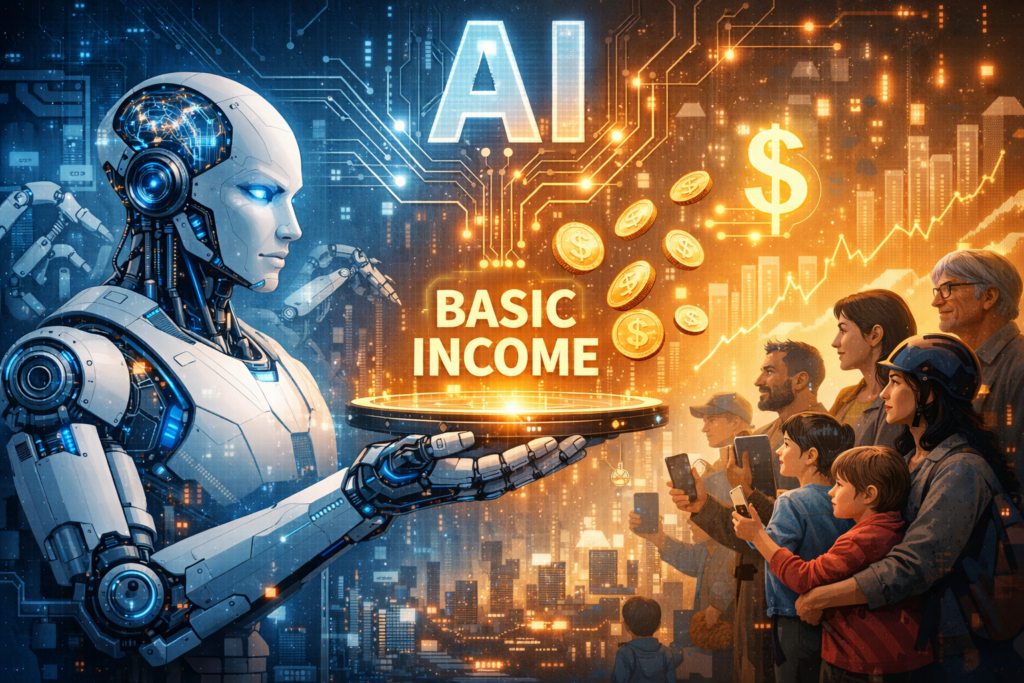
The idea of a universal basic income (UBI) has moved from the fringes of political philosophy to the centre of economic debate. For decades it was regarded as an interesting but impractical proposal advanced by academics, futurists and a handful of social reformers. Today it is discussed in ministries of finance, international organisations and boardrooms alike. The reason is simple: the accelerating development of artificial intelligence has revived an old question. What happens if technological progress reduces the demand for human labour faster than new occupations can be created?
Universal basic income is a deceptively simple concept. Every citizen receives a regular payment from the state, regardless of employment status, wealth or personal circumstances. Unlike traditional welfare benefits, it is unconditional. One receives it whether one works or not. The purpose is not merely to alleviate poverty but to establish a minimum economic floor beneath every member of society.
The concept is far older than many imagine. Variants can be found in the writings of Enlightenment thinkers and nineteenth-century social reformers. Yet it was only in the twenty-first century that governments began conducting substantial experiments to determine whether the idea might function in practice.
To read more, go here.